Buy Solar Products Online in Pakistan: 2026 Smart Guide
Deciding to buy solar products online has become the quickest route for Pakistani homes and small businesses to break free from soaring grid tariffs in 2026. A well-built online catalogue puts transparent pricing, verified specifications, and warranty terms right in front of you, so there is no guesswork at a crowded electronics market. This guide walks you through exactly what to inspect before you tap “add to cart,” so your very first solar purchase stays safe, documented, and future-proof.
Grid electricity in Pakistan crossed painful new highs this year, and the State Bank’s easing cycle finally nudged financing rates lower. That combination has pushed thousands of families toward rooftop solar. When you shop digitally, you gain something a physical shop rarely offers: a paper trail. Every panel wattage, inverter model, and battery chemistry is written down, letting you compare like for like before spending a rupee.
Why More Pakistanis Now Buy Solar Products Online
The shift is not just about convenience. Online storefronts list the same Tier-1 modules that installers use, often at prices anchored to real-time import costs. You avoid the markup layered on by middlemen, and you can read genuine specification sheets instead of relying on a salesman’s memory.
Delivery networks now reach far beyond the big cities. A household in Hyderabad or Sukkur can order the identical kit a customer buys through a solar company in Karachi, with couriered panels and a documented installation plan. That levels the field for smaller towns that were long underserved.
- Transparent pricing: published rates you can screenshot and compare across sellers.
- Verified datasheets: module efficiency, temperature coefficient, and warranty length in writing.
- Doorstep logistics: insured freight for fragile panels and heavy batteries.
- Digital records: invoices and warranty cards stored in your email, not lost in a drawer.
The Core Components in Your Online Cart
A complete system is more than panels. Before you buy solar products online, understand the four building blocks and how each one affects your daily savings.
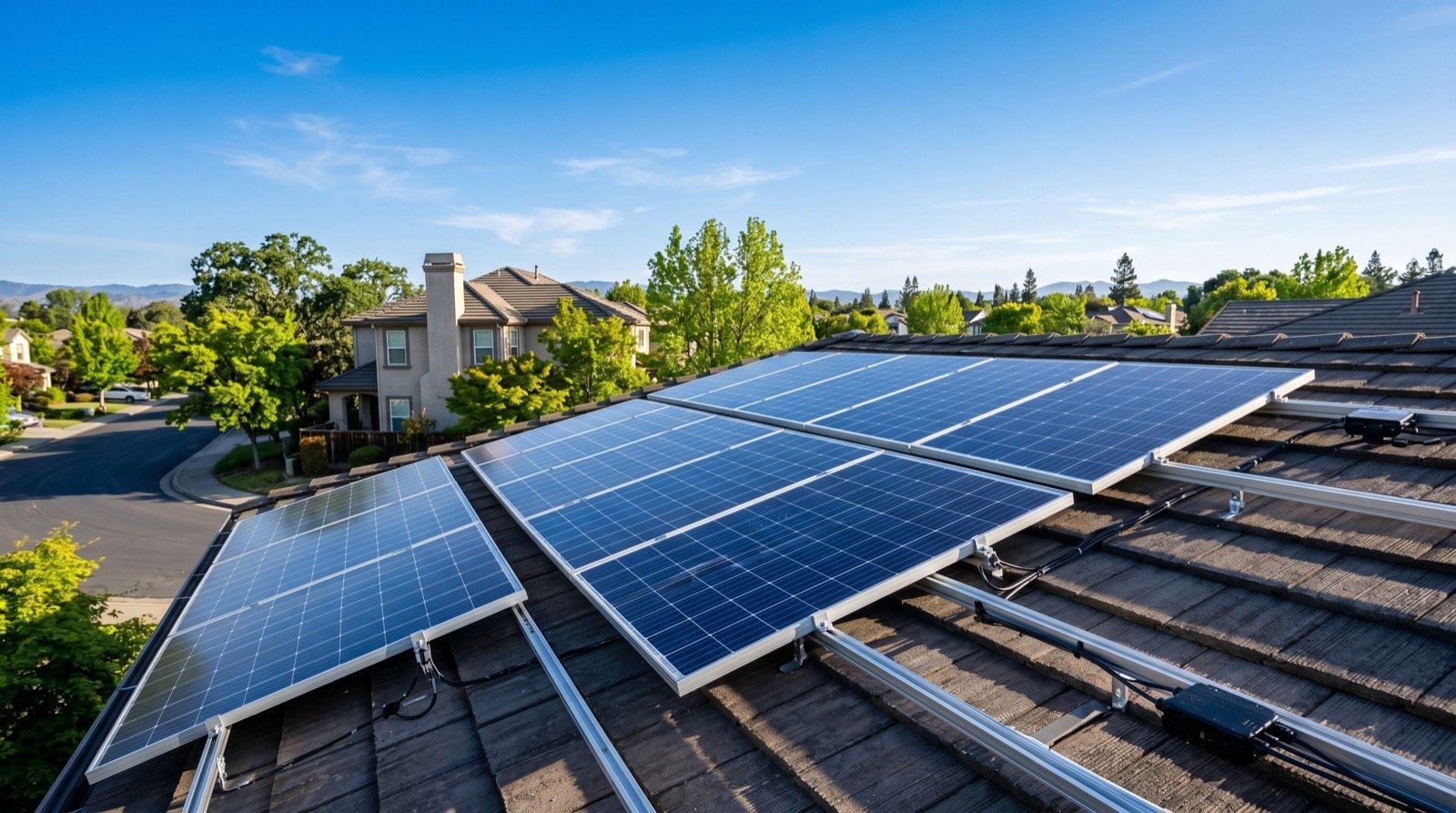
Panels convert sunlight to DC power. Inverters turn that into the AC your fans and fridge use. Batteries store surplus energy for load-shedding hours, and the balance-of-system parts (mounting rails, cables, breakers) keep everything safe and code-compliant.
| Component | What to Check | Typical 2026 Warranty |
|---|---|---|
| Solar panel (N-type) | Efficiency above 21%, low degradation | 25–30 years performance |
| Hybrid inverter | MPPT count, surge rating, monitoring app | 5–10 years |
| Lithium battery | LiFePO4 chemistry, cycle count, BMS | 6–10 years |
| Mounting & cabling | Aluminium rails, tinned copper, MC4 seals | 10+ years structural |
How Do You Avoid Fake or Refurbished Solar Gear?
This is the question that keeps first-time buyers awake. Counterfeit panels and rewound inverters still circulate, so treat verification as step one, not an afterthought.
Match the serial number on the module to the manufacturer’s online lookup tool. Confirm the inverter appears on the AEDB and IEC certification lists. Insist on a commercial invoice that names the exact model, not a vague “solar system.” A reputable seller welcomes these checks because they have nothing to hide.
- Scan the panel serial against the maker’s verification portal.
- Cross-reference the inverter model with published efficiency ratings.
- Ask for the flash-test report that ships with Tier-1 modules.
- Confirm the warranty is honoured locally, not only in the country of manufacture.
Sizing a System Before You Check Out
Buying the wrong size is the most expensive mistake in solar. Start with your last twelve electricity bills and note the peak monthly units. A typical Karachi home using 800–1000 units a month usually lands on a 5kW to 7kW system, while a modest apartment may only need 3kW.
Roof space matters too. Each 580W panel needs roughly 25 square feet with clearance. If your roof faces slightly east or west, add a little headroom in wattage to offset the angle. When in doubt, work with genuine reliable local experts who can validate your load calculation before the order is finalised.
Net Metering and the 2026 Rules
Net metering lets you sell surplus daytime power back to the grid, shrinking your bill further. The National Electric Power Regulatory Authority updated its buy-back framework this year, so confirm the current export tariff for your DISCO before sizing an oversized array. You can review the official policy direction through NEPRA, the country’s power regulator, to avoid surprises at approval time.
Most reputable online sellers bundle net-metering paperwork support. Ask whether the quoted price includes the bidirectional meter and the application filing, because those two items quietly add cost when handled separately.
Payment, Delivery, and After-Sales Peace of Mind
Choose a seller that offers traceable payment and insured shipping. Cash-on-delivery may feel safe, but a documented bank transfer tied to a tax invoice protects your warranty claim later. Confirm the estimated dispatch window and whether fragile panels travel in foam-corner crates.
After-sales support separates a one-time vendor from a long-term partner. Look for a published service number, a monitoring app that flags underperformance, and clear turnaround times for replacements. Solar is a fifteen-year relationship, not a single transaction.
Seasonal Timing and Bundle Deals
Timing your purchase can stretch your budget further. Demand for panels and inverters spikes at the start of summer, when everyone scrambles ahead of the cooling season, and prices firm up accordingly. Shopping in the cooler months often unlocks better bundle pricing and faster dispatch.
Complete kits usually beat piecemeal buying. A matched bundle of panels, inverter, mounting, and cabling from a single source avoids compatibility headaches and simplifies any future warranty claim, because one seller stands behind the whole system rather than pointing fingers at another brand.
Watch the total delivered cost, not just the sticker price. Freight for heavy batteries and fragile glass can vary widely, so a slightly higher listed price with free insured shipping may still be the cheaper deal once everything reaches your rooftop in one piece.
Frequently Asked Questions
Is it safe to buy solar products online in Pakistan?
Yes, provided you verify serial numbers, insist on a model-specific tax invoice, and buy from a seller with local warranty support. Digital records actually make claims easier than an undocumented market purchase.
How much does a 5kW solar system cost in 2026?
Prices vary with panel brand and battery choice, but a quality 5kW hybrid setup generally falls within a mid-range bracket that pays back in three to four years thanks to higher grid tariffs.
Can I add batteries later instead of buying them now?
Absolutely. Choose a hybrid inverter with battery-ready terminals today, run on net metering first, and add LiFePO4 storage when your budget allows without replacing the inverter.
Do online panels come with a real warranty?
Tier-1 modules carry 25 to 30 year performance warranties. Keep the invoice and serial photos, and confirm the seller processes claims through the local distributor.
Final Thoughts
The smartest way to buy solar products online in 2026 is to treat it like any major appliance purchase: verify, compare, and document. Match your system to real consumption, confirm certifications, and lean on trusted local support for the install. Do that, and your rooftop becomes a quiet, bill-slashing asset for decades. Ready to compare kits and lock in transparent pricing? Explore a verified catalogue today and take your first confident step toward energy independence.